


HERI Africa Research Hub, University of Embu | 5th May 2026
Numbers are the language of possibility, yet research has constantly shown that millions of children in Africa have the ability but the right numeracy foundation is not laid early enough. When children leave the early grades without right numbery skills, the deficit compounds with every passing year, widening inequalities and narrowing futures. A s part of his mission to promote foundational numeracy skills in early grade learners, the HERI Africa Research Chair in Mathematics Education on May 5th 2026 convened Head of Institutions (HOIs) from selected schools in Tharaka, Meru, Embu, and Kirinyaga. As key stakeholders, the focused engagement explored the role of mathematics clubs and use of relevant teaching learning materials (TLMs) in teaching numeracy to early grade leaners. The forum, held at the HERI Africa Research Hub, University of Embu, provided a platform for the stakeholders’ candid, structured dialogue and reflections on need for collaborative action on strengthening foundational numeracy.
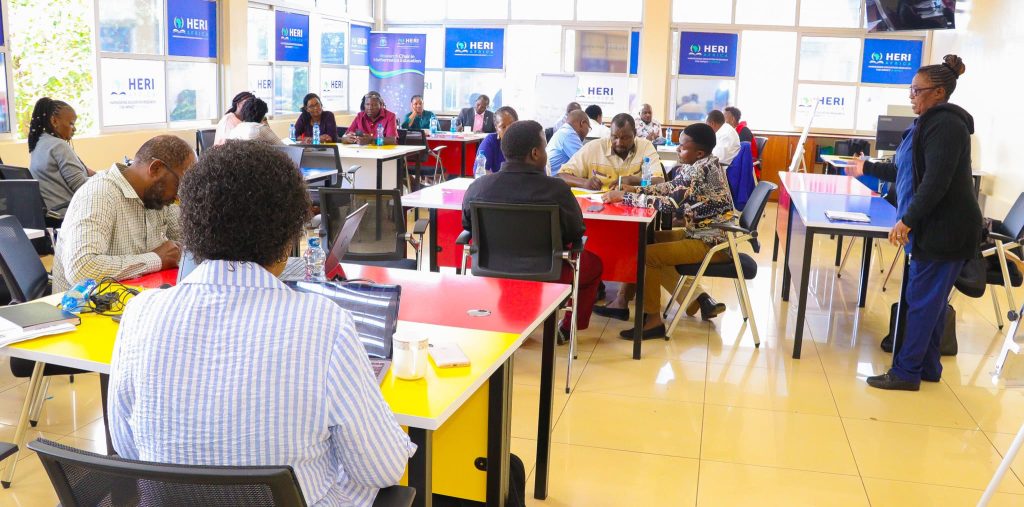
HOIs reiterated that foundational numeracy underpins performance across all the subjects, shapes a child’s confidence in the classroom and ultimately determines ability to participate meaningfully in lifelong learning, particularly in the increasingly numerate world. In the context of CBC which requires learners to demonstrate application of skills rather than recall, the stakeholders stressed the need for schools to priorities early numeracy skills, failure to which learners will continue to struggle with every subsequent level of learning.
The stakeholder engagement forum highlighted Mathematics Clubs as an innovative and practical approach to making mathematics enjoyable, relevant and accessible to young learners. They noted that through math club activities, leaners are exposed to hands-on experiences, games, problem-solving tasks and peer learning opportunities that complement classroom instruction and help build confidence in learning mathematics.
“I know through mathematics clubs, learners with do better because learners will love mathematics more, together with teachers who love teaching mathematics. I wish all the HOIs in the country would embrace numeracy clubs”, noted Sarah Nkatha, HOI, Antabankui Comprehensive School.
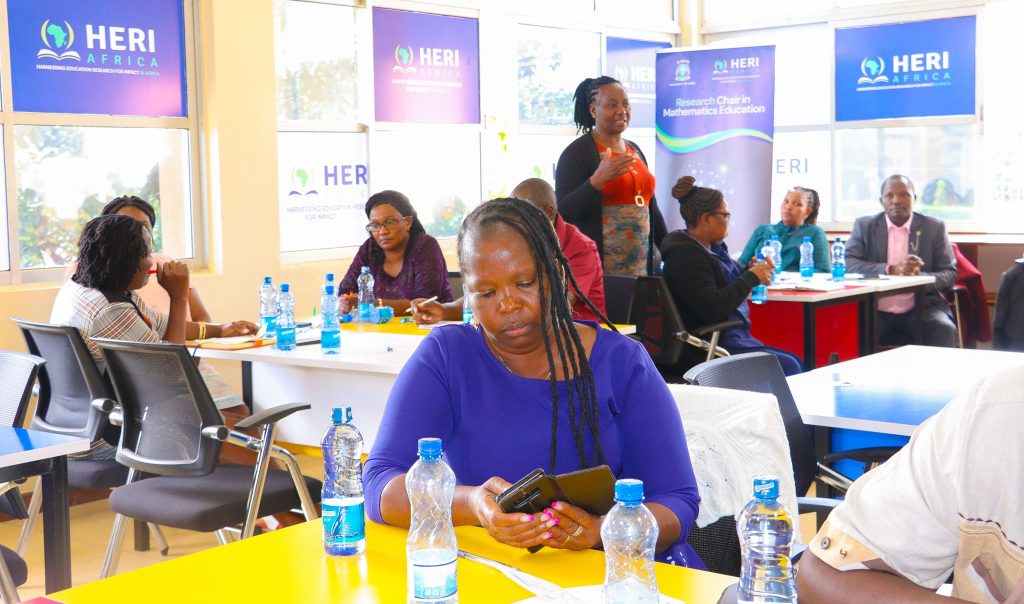
Participants further noted that effective use of TLMs are essential for supporting conceptual understanding and improving young learners’ engagement with numbers. They noted that appropriate TLMs help learners visualize mathematical concepts, encourage active participation and enable teachers to deliver lessons more effectively.
Prof Ciriaka Gitonga in her presentation identified HOIs as critical enablers in strengthening foundational numeracy.
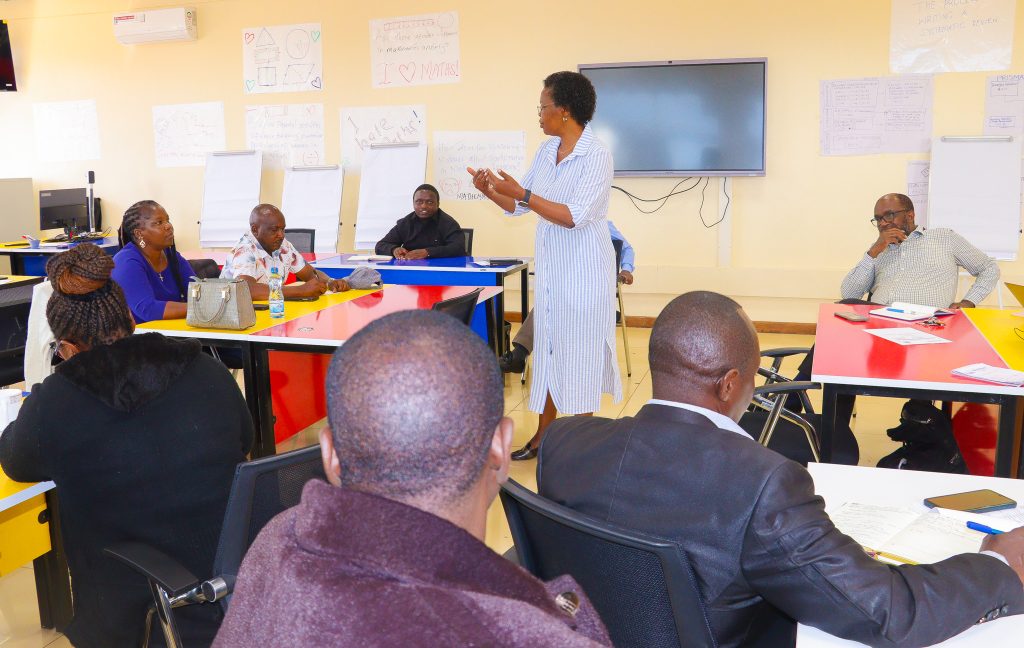
Dr. Simon Karuku stressed their role in providing leadership, supporting Mathematics Clubs, allocating resources for teaching and learning materials and fostering partnerships with communities and education stakeholders and creating environments where numeracy learning can thrive. “The head teachers have expressed their commitment to supporting the program and are already working with our teacher educators in their schools and are eager to work with us to enhance the teaching and learning of mathematics among young learners”, noted Dr. Karuku.
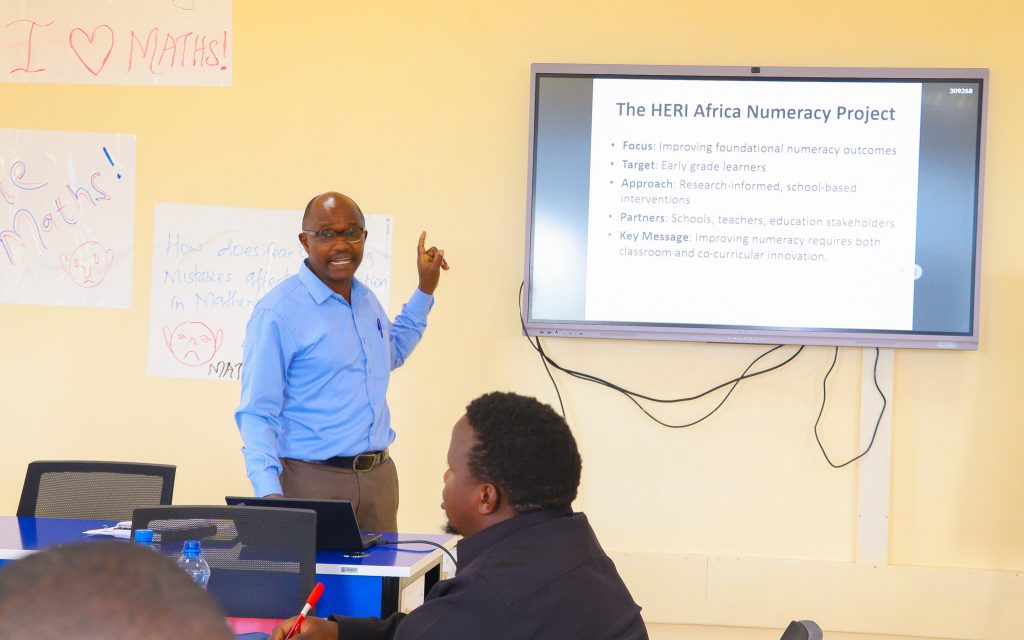
Through the Research Chair in Mathematics Education, HERI Africa strives to contribute to the improvement of foundational numeracy by generating evidence, building the capacity of educators and researchers, fostering stakeholder engagement and promoting the use of research findings to improve teaching and learning. The stakeholders’ forum highlighted that collaborative action and the commitment of stakeholders are essential to ensuring that children acquire strong foundational mathematics skills.
The HERI Africa Research Chair in Mathematics Education is hosted at the University of Embu and forms part of the HERI Africa initiative, a Pan-African programme committed to advancing Africa-led education research for impact.