
Home / Research
Research, Innovation and ExtensionResearch
Soils turning acid across sub-Saharan Africa. Pollinators under heat stress. Organic waste that ought to be fertiliser. Classrooms where numeracy stalls. Embu takes on problems that have an address, and last financial year that work produced one hundred and thirty peer-reviewed papers.
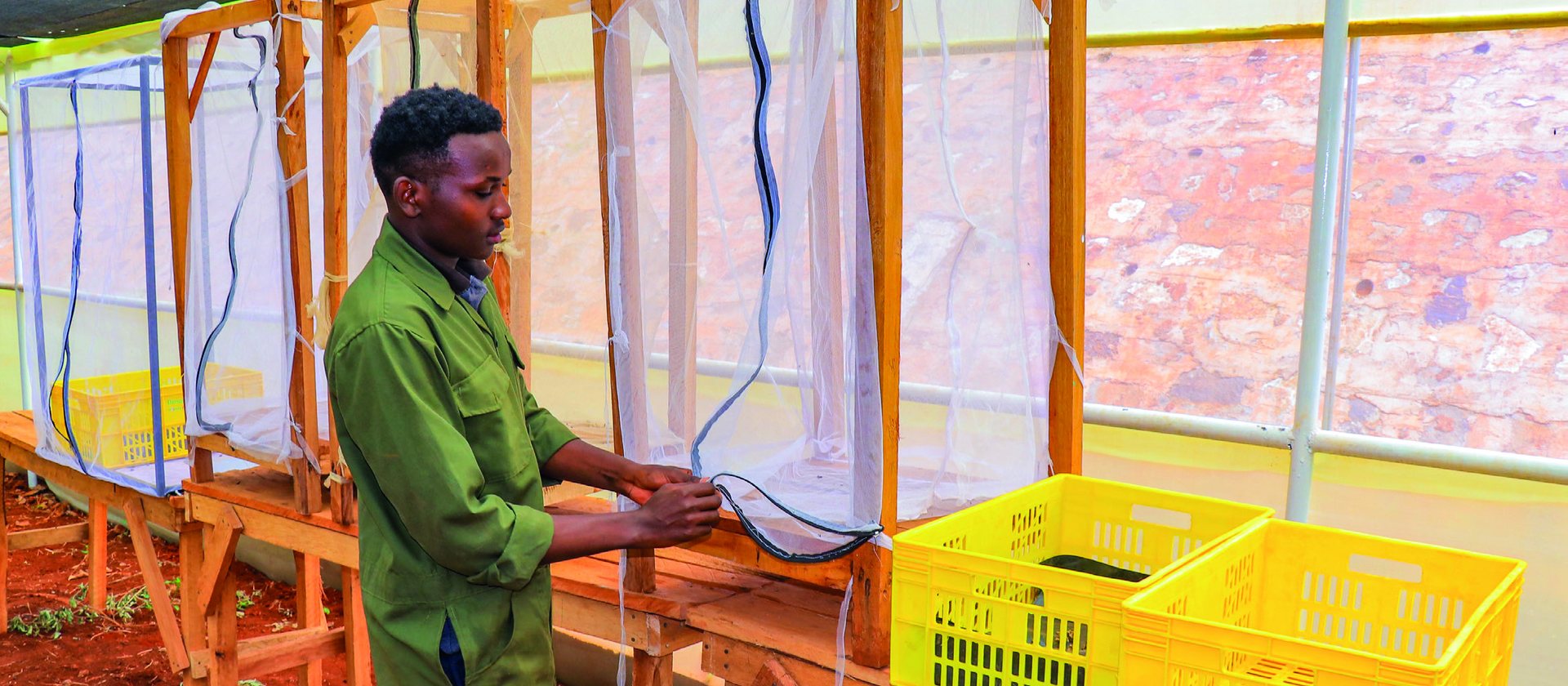
Black Soldier Fly facility, University of Embu. Photograph from The Flashlight, Issue No. 14.
What a year of research adds up to
Reported by the Directorate of Research and Extension for the last financial year. None of these figures appear anywhere on the University’s live research website.
Four units, one pipeline
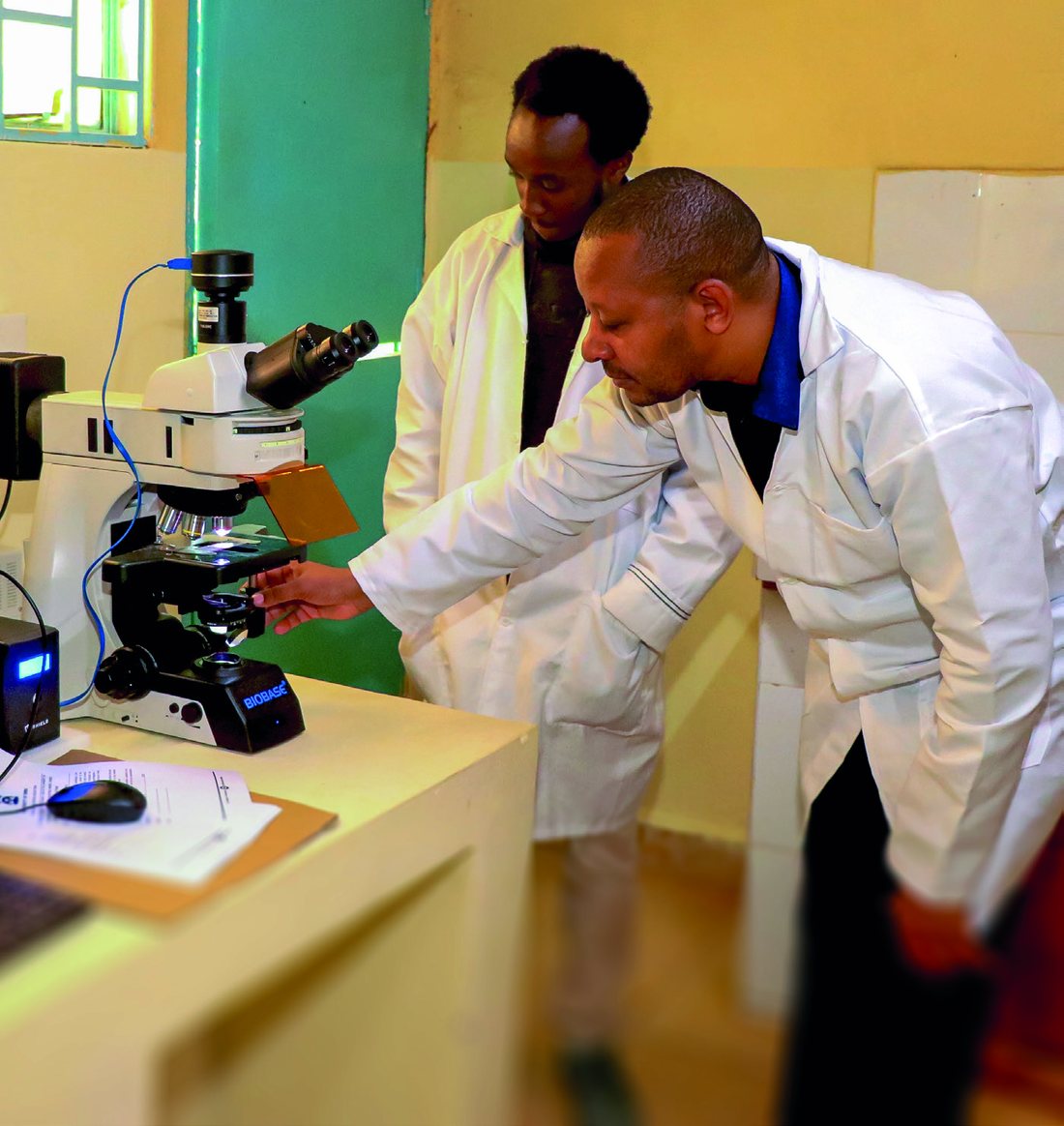
Research at Embu runs through four offices that hand work to one another. The Directorate of Research and Extension finds the money and holds the standards. The Board of Postgraduate Studies supplies the people. The Centre for Climate Change Adaptation and Mitigation runs the field and the hub. The Technology Transfer Office takes what works out of the building.
The Directorate secured Good Financial Grant Practices certification this year and stood up an Institutional Ethical Review Committee, which between them are what let a funder in Zurich or London write a cheque to Embu at all.
Money that arrived this year
Two of the eleven new awards are large by any standard, and both went to principal investigators based in Embu rather than to a partner abroad.
Alongside them, Dr. Mark Otieno of the School of Agriculture was named the 2026 recipient of the Marsh Award for Ecologists in Africa, given by the British Ecological Society and funded by the Marsh Charitable Trust, for work on thermal adaptation in African honeybees and on nocturnal pollinators.
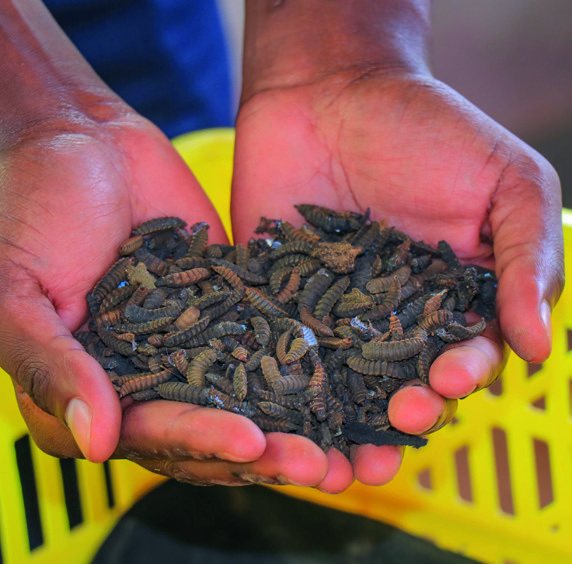
The town’s rubbish, read as an input
The Centre for Climate Change Adaptation and Mitigation works on three projects at once: climate advocacy in schools, converting urban organic waste into energy and fertiliser, and smart hydroponic farming. The Black Soldier Fly facility sits at the centre of the second of these, turning what Embu town throws away into animal feed and soil amendment.
The Centre also runs the Climate Innovation Hub, where the same argument is made to students and to the county rather than only to a journal.
Who is working on what
Thermal adaptation in African honeybees, and the nocturnal pollinators that nobody counts. 2026 Marsh Award for Ecologists in Africa.
Education research that is meant to change practice, funded at USD 659,986 through HERI–Africa.
Regenerative options for tropical soil management, with ETH Zurich, funded at EUR 483,589.
“A Soft Matter Physics Approach to Tuning Soil Acidity Across Sub-Saharan Africa.” The Soil and Organic Matter project around him hosts one PhD and three MSc students.
Why numeracy stalls in Kenyan classrooms, and what a mathematics teacher can do about it. Chair launched 12 March 2026.
Afya Bora, an artificial-intelligence approach to healthcare access, now being prepared for market.
Urban organic waste to energy and fertiliser, smart hydroponics, and climate advocacy in schools.
Moving University inventions into companies, in partnership with the Kenya National Innovation Agency.
Ten areas of concentration
The Directorate’s own list, quoted as published.
From the laboratory towards the market
Five inventions are being prepared for commercialisation, with the Technology Transfer Office and the Kenya National Innovation Agency.
Artificial intelligence applied to healthcare access. Dr. Fortine Mata.
A mental wellness application built by University of Embu students.
Eco-friendly pest control for smallholder cropping systems.
Concrete that closes its own cracks, aimed at road and building maintenance costs.
Fertiliser produced from organic waste streams.
Cricket farming for food and feed, an adjustable power and lighting scheme, and research into gastrointestinal malignancies.
Who Embu works with
New agreements signed this year, and the exchanges already running under them.
Building the base under all of it
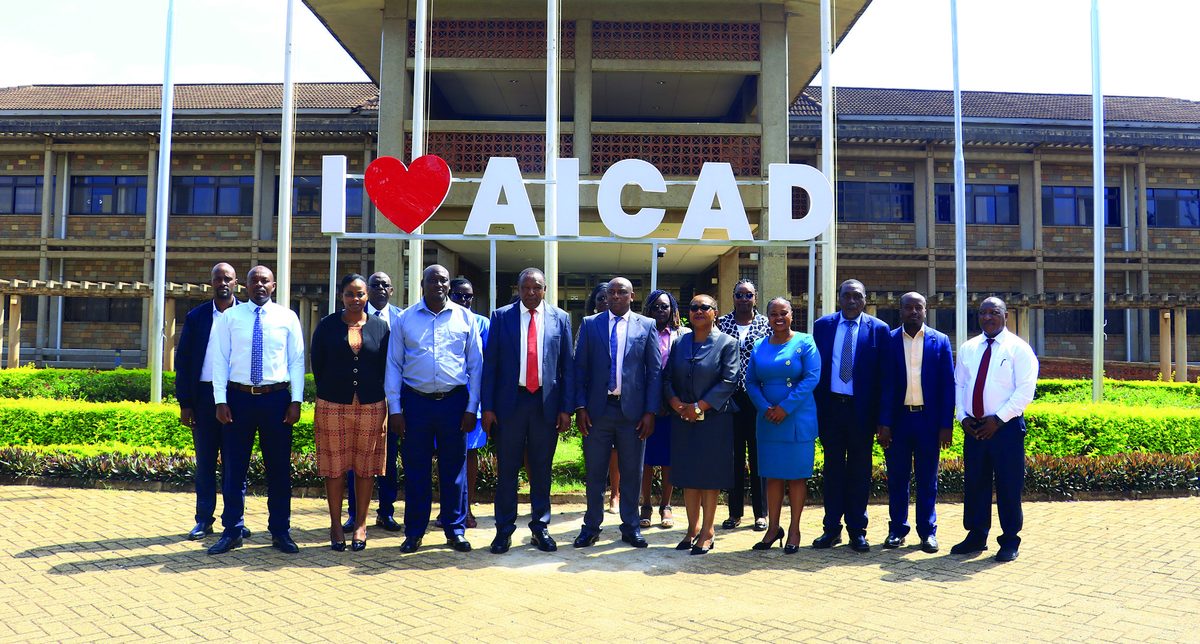
Grants follow governance. This year the University established an Institutional Ethical Review Committee and secured Good Financial Grant Practices certification, the two things international funders ask for before anything else.
In June the University hosted a British Academy International Writing Workshop from the 24th to the 26th, with more than sixty scholars and facilitators including Prof. David M. Anderson of Warwick and Prof. Eunice Kamaara of Moi University. Ninety-seven per cent of participants rated it Excellent or Very Good, and over three-quarters said they intended to produce two journal articles within the year.
The University was also recognised at the 2026 Africa Public Service Day for its Smart Digital Innovation Ecosystem, and took part in STRI Week at KICC from 18 to 22 May 2026.
Ongoing Grants, now live
The Directorate’s Ongoing Grants page, previously unreachable, now lists these active awards.
KES 31,877,404.
French bean disease resistance. KES 10.4 million.
Breast cancer research. USD 20,000.
Aflatoxin biocontrol. SEK 1.8 million.
Pest birds in rice. SEK 1.2 million.
AMI System. GBP 6,900.
Pollinators of the Taita Hills. EUR 779,390.
Source: research.embuni.ac.ke, Ongoing Grants, read 16 September 2026.
Recent research news
A sustainable cement breakthrough
Dr. Dorah K. Muthee and Prof. Jackson W. Muthengia, with researchers from COMPASS led by Prof. Martin Thuo of North Carolina State University, contributed to an international breakthrough in sustainable cement production. 19 August 2026.
Dr. Hezron Mogaka’s NRF grant
KES 31,877,404 awarded through BIO Kenya. Dr. Dominic Kitavi also received a travel grant to the National Taipei University of Technology.
Researcher of the Year awards
Dr. Josephine Ngunjiri, Researcher of the Year; and Researcher, Student Researcher, Outstanding Young Researcher and Inventor of the Year 2024 all announced in December.
Biochar and ICOF commercialisation
A French government-backed initiative to commercialise biochar and the Improved Cook and Oven Facility (ICOF) in western Kenya.
Source: embuni.ac.ke, Research category, and research.embuni.ac.ke news, read 16 September 2026.
Latest from the e-Repository
- Procurement practices and value for money in State Corporations in Kenya
- Transfer Hydrogenation: Advances in Manganese and Nickel Metal Catalysis
- Prospective Impetus of Agriculture Services Post Devolution on Household Food Security among Smallholder Farmers in Eastern Kenya
- Influence of Farmland Factors on Adoption Intensity of Nutrient Management Practices in Tharaka-Nithi County, Kenya
- Governance Dynamics of Community Forest Associations in Kenya
Source: repository.embuni.ac.ke (DSpace), read 16 September 2026.
Note for the Directorate. Everything quantified on this page was taken from The Flashlight, Issue No. 14, because the live research website publishes none of it. As of this build, research.embuni.ac.ke carries no publication count, no grant values and no named awards; its Ongoing Grants page (now live, see below) is the one exception; and the Board of Postgraduate Studies site lists no programmes and no statistics. The BPS site also styles the Director as Dr. Hannah Karuri, while the current management list has Prof. Hannah Karuri. A research page is the one page where an absence of numbers is itself the message, and at present the estate is sending the wrong one.